August 22, 2011

BEES: Two Queens, Two Hives and a New Approach

written by Tom

So seven days had passed since Hernan and I had installed the two new Russian queens. After a nerve-wracking week of wondering whether or not they'd been released, it was time to take a look. (The squashed bee on top of the frame is one reason for general anxiety when working the hives. One false move and you can easily kill the queen.) Here you can see the queen cage in hive Boris. The candy end had been completely eaten through. A bee is seen cleaning out remnants. The queen had been released!

In Hive Natasha the queen cage had fallen from the frames. Fortunately it landed bottom-up, and the screened bottom board caught it, too. This candy end also had been eaten through, so that queen had been released. So far, so good. I worked the hives to clean them up a bit and remove the cages.

I put the cages at the entrance so that any bees inside could find their way back out. I'd read that in a book. However I quickly discovered that remnants of Her Majesty's pheromone was enough to set off a bit of robbing, as bees from Natasha quickly flew over to see what the good smells were about. The ones who did met their demise thanks to Boris' guards. For Hive Natasha I just blew any bees out of the cage. No more robbing.

This end frame had been drawn out on one side and filled with syrup honey. There were more bees than I'd remembered in Natasha. She seems to be doing well, regardless of my worries about only seeing a bee or two at a time at her entrance.

Hive Boris' numbers also seemed to have leveled off. This original hive had many more bees on it immediately after our requeening efforts a week prior. Now the two hives seemed closer in strength, more even, though Boris still has more bees.

In the following eight days I built and readied more frames. This time I used old-fashioned crimpwire with 100% beeswax. Bees love this stuff, and take to it in no time, is what they told us in Bee School. I had to make 14 of these total, to combine with my four frames of drawn comb I'd harvested and readied a few weeks prior, to make 18 frames (nine each for each hive addition).

In these past two weeks I've become convinced that one of the most important things we can do as beekeepers is, "First, do no harm." I always prepare a mental game-plan for my inspections. Now, I'm going to do only what's necessary to achieve that and nothing more. I'm also going to learn how to read a hive without even opening it. Minimizing risks and trusting the bees to do their jobs seems to be a perfect approach to me. Less is more. Hive Boris was looking good, even stronger than before and was moderately calm.

I found a good many bees and evidence that the new queen was laying, as capped brood was found. I quickly put things back in order and moved on to Hive Natasha.

A fair number of bees greeted me in the new hive, and her demeanor was calm.

One end frame totally capped with syrup honey. They are busy laying up stores for the winter. Only one side of this frame had been drawn and used, so I flipped it when I returned it to the hive to encourage them to work the other side.

And another honey frame. Both sides full and capped. Wow, these deep frames were H-E-A-V-Y! Each hive needs to store up about 60 pounds of honey for the winter.

And a third honey frame in Natasha. Where's the brood and eggs? Uh-oh. Was this hive queenless?

On the fifth frame I found what I came looking for: capped brood. I could hear the choir of angels singing. The new queen had laid these eggs. It had been 15 days since I'd requeened. In the life cycle of the honeybee, it takes 21 days for the worker bee to go from egg to larvae to pupae to emerged bee. In that time, it takes nine days to go from new uncapped egg to a capped larvae or "brood" on the comb. It had been 15 days since the split, so all brood on those frames we put in Natasha had hatched. Only new eggs would be capped brood. Both Boris and Natasha with their new queens had capped brood. Success!!!

Deeper into Natasha showed that her strength had greatly increased since she'd been started.

I took the four empty honey frames I'd spun out, and placed them in the center of Natasha's second box. This gives them a jump-start, as the queen can start laying right away in those frames. The sooner the better, so this new hive can get up to full strength before winter comes.

The still wet honey frames quickly attracted attention from below.

I also converted a beetle trap into an inside-the-hive pollen feeder. I removed every other rung on this trap with a Xacto blade. Natasha's bees immediately loved the fresh pollen gift I gave them.

I cleaned out both top feeders. I must say that the plastic two-gallon top feeder is wonderful. Hose it down to quickly clean. Any bees underneath it seem to not mind as I clean the top side. I love my plastic top feeders and so do the bees!

Fresh syrup was given to both hives and bees quickly climbed up to feed.

Boris is looking good. The numbers outside the hive have been growing.

As has little new hive Natasha. It's not a ton outside, but it's far more than the none or one bee I'd seen in the previous weeks. She's off to a great start!
I left both with gifts and a second story addition. Hopefully they'll immediately take to their new quarters, spin out the honeycomb on the pure wax foundation I'd given them and start to lay eggs and increase their numbers in time for winter. We'll see. So far, so good!

VEG: General update

written by Yvonne

(Still a little behind in updates. This really should have been posted last week but I forgot I had it ready to go.)

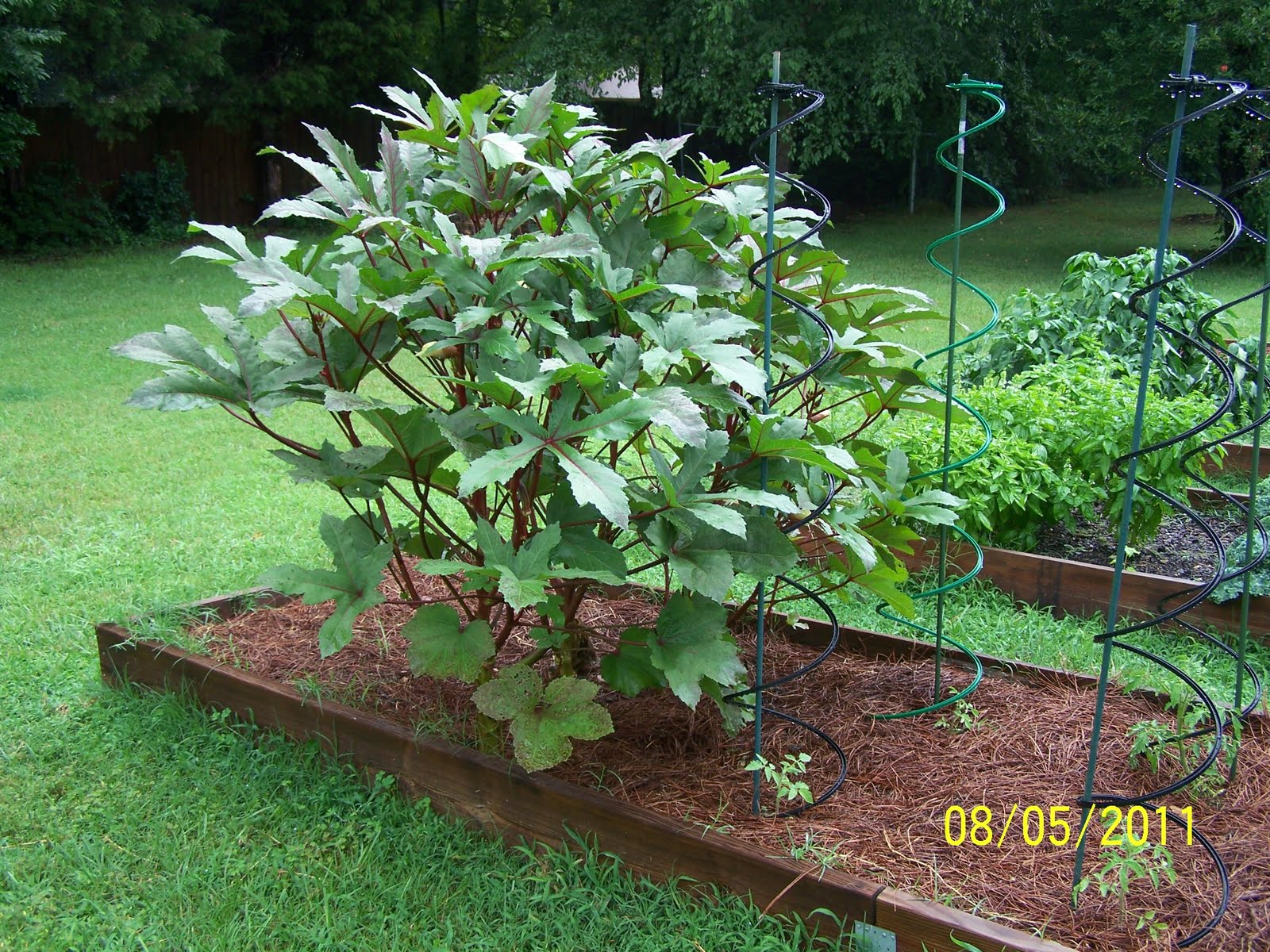
We are very happy with this variety of okra. Not only is the red color gorgeous, the plants aren't as huge as the variety we grew last year. I pruned the leaves on top and around the sides in order to keep the plants to their current size. (We didn't find out until after we pulled up the plants last year that it is OK to prune them back to control their size.)


I used my pressure cooker to make a black-eyed pea soup with okra. (To Rebecca - another fantastic recipe from the pressure cooker cookbook!) Then I made a recipe that used Indian spices (cumin, coriander, turmeric) okra, and onions. It was out of this world, and I'm not even that fond of okra!


Haven't cooked anything more with the peppers since the fajitas.  We did give some to a friend as a birthday gift. We forgot to put our name on the gift bag. Tom said, "I think she'll know it was from us."  :)


This is some cabbage we planted that we didn't think was going to do anything. All of a sudden, it poked up through the pine needles.


And this is the broccoli Tom had stared in peat pots. He moved the pine needles out of the way and just planted the whole pot into the bed.


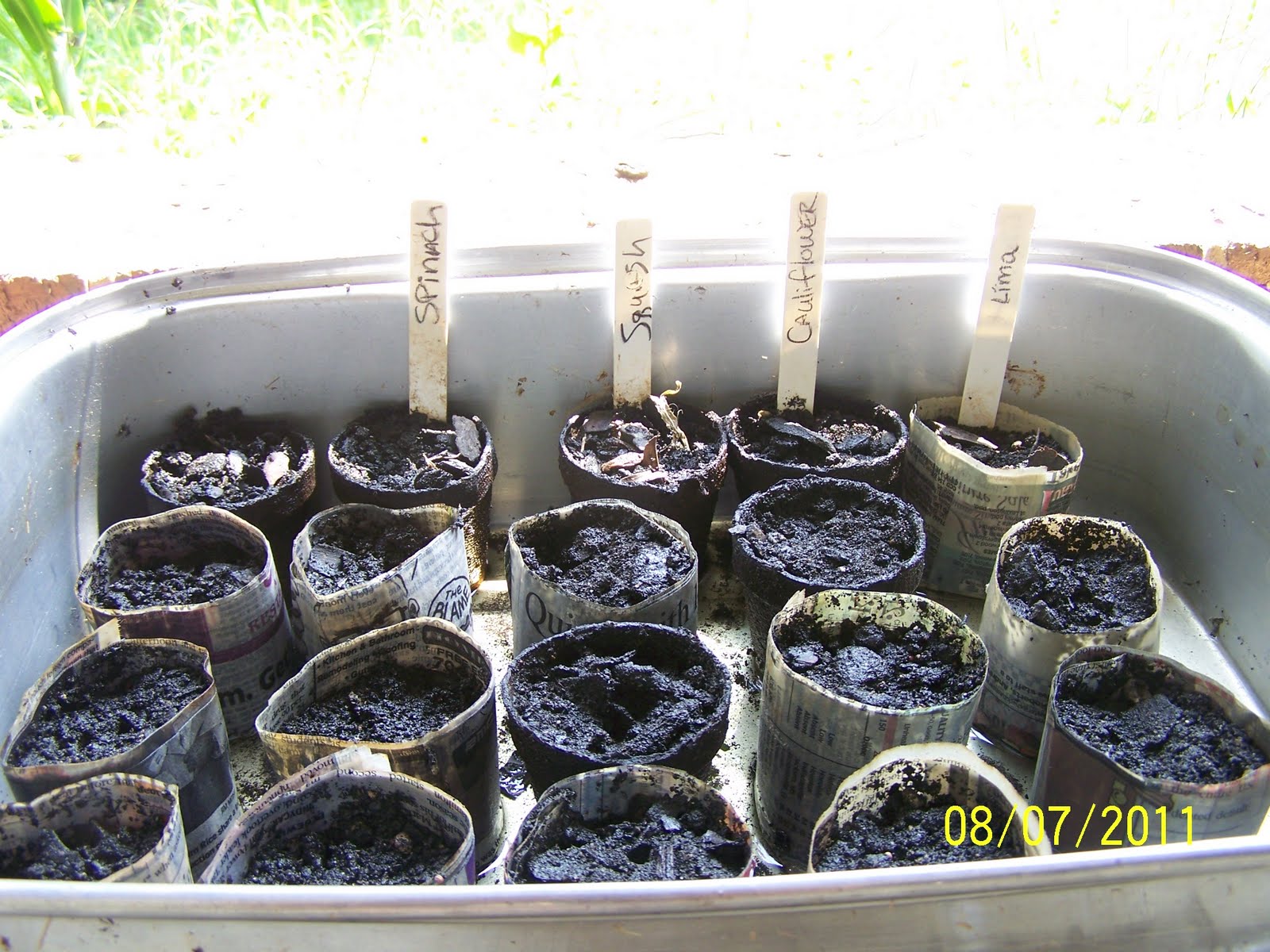
We finally got to put our newspaper pots to the test. It was time to get seeds started for spinach, winter squash, cauliflower, limas....


lettuces, and collards. So far so good. They held the dirt and even when fully wet, they kept their shape.  We'll see if they last through germination and planting.  If they do, we've just saved ourselves a ton of money on buying peat pots AND we get to recycle our newspapers. Hooray!


August 11, 2011

VEG: Pepperlicious

written by Yvonne

I've been busier than normal lately so I'm a bit behind on veg posts.  After next week, things should be back to normal.

The bell peppers are FANTASTIC!  These were the first to be harvested.  I grilled them with a red onion and made fajitas. Yum, yum!


The red okra is flowering and is very pretty. I didn't realize it when I took this picture but there is a wasp, well camouflaged, sitting at the base of the flower. Do you see it?


Our one fully grown tomato plant has one tomato so far, but lots of flowers.


Tom started broccoli in peat pots a while back. They are now ready to be put in the beds. Tom swears that this time, we are going to get broccoli, not just broccoli plants.


$21 worth of bell peppers right here, my friends. FAJITAS!!


August 7, 2011

BEES: Gambling on a split

written by Tom

My two new marked Russian queens arrived on Friday, safe and sound. The ladies at the post office handed it to me with contorted facial expressions and at arm's length, laughing at themselves the whole time.


Knowing honey bees keep their hives at 94 degrees Fahrenheit, I quickly moved them into a basket for safe keeping on our screened in back porch, turning the overhead fan off.

It was raining cats and dogs Friday. Bees don't much care for cats or dogs. So once a break occurred in the seven-inch deluge, Yvonne and I quickly erected her10x10 tent above the hive. My friend and mentor Hernan showed up to help me requeen Hive Boris and make the split, creating hive Natasha. First order of business? Going over a checklist of actions so we'll be synchronized.

We had to put the four valuable frames of comb back in storage for safe keeping. We'll be using this once Natasha gets strong enough to start on a second box.

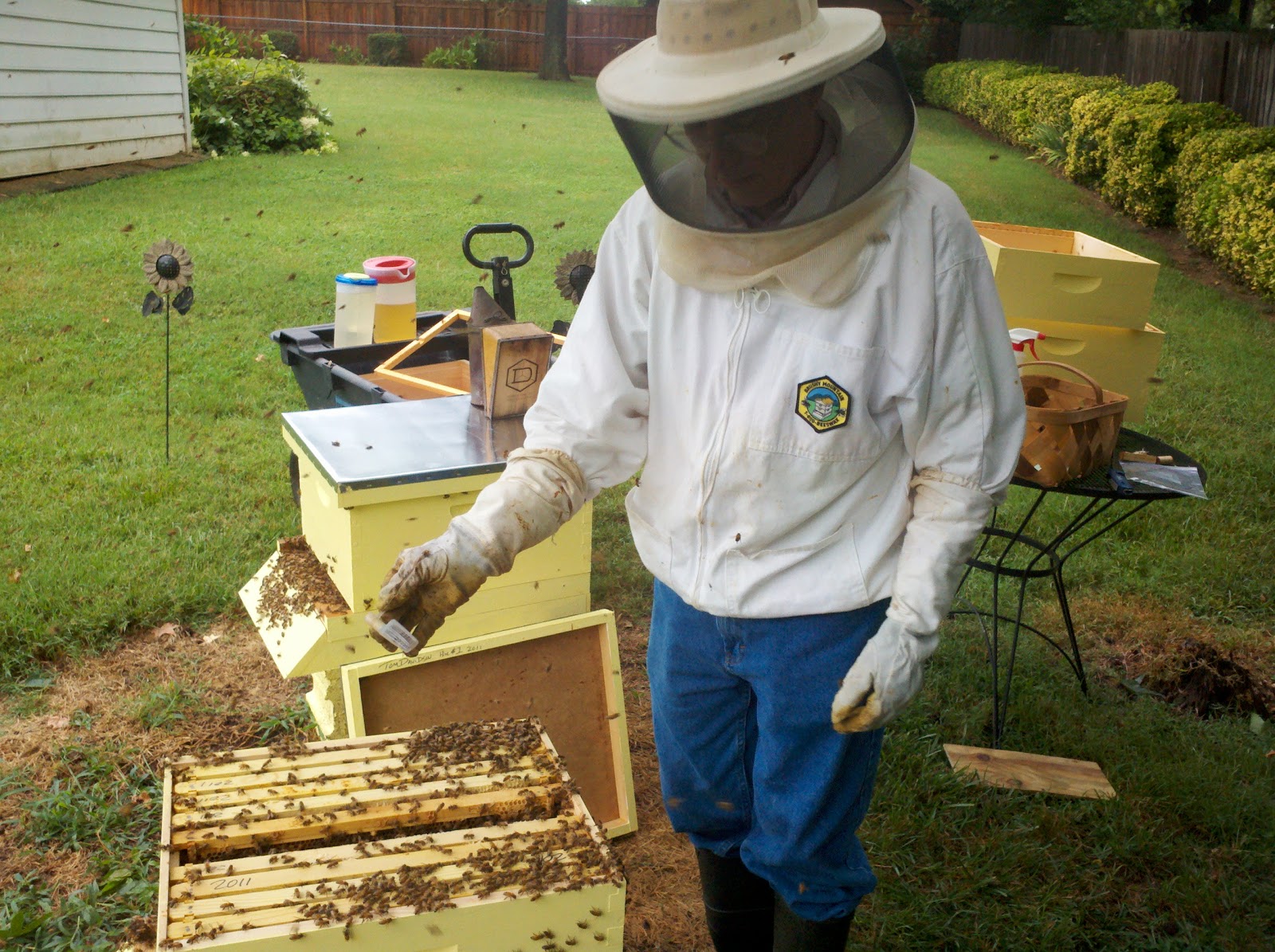
Then our work began. Hernan didn't want to smoke the bees until the very end, or until needed. I made sure to have some syrup in a spray bottle nearby if things got out of hand. They did, and the spray came in handy, let me tell you!

I began inspecting each frame from the top box of Boris, looking for the queen. We first have to remove her before adding in the new queen. We did this inspection while creating hive Natasha, inspecting and moving one frame at a time from Boris' top box into Natasha. Hernan re-inspected the frames as I handed them to him, in case my beek eyes missed the queen.

Cloud of bees were everywhere, wondering what we were up to.

One bee crawled up my right arm under my glove and gave me my second sting for the season. For some strange reason I found myself elated, again, at the sensation, just a couple minutes after. Unfortunately, Hernan got stung in a MUCH more unmentionable place. I don't think he finds these Russian girls as friendly as I do. "What's another stripe for the tiger?" he said in English, as we both laughed at our distress. I got him to translate it to Spanish (it sounded better). Having earned our extra stripes, Hernan spotted the queen on the next-to last frame of the top box. Her mark had completely worn off. My beek eyes didn't see her, but Hernan's trained eyes had no trouble seeing her. He quickly caught her in a queen cage, and moved her to the side.

We removed all beetle traps while inside the hive. The beetle jails had caught a few of the pests in each of the traps, so I'm definitely a believer in these little contraptions. I also kept reassuring the clouds of angry bees that we had a larger, benevolent purpose at hand. I don't think they quite believed me.
 

The queen catcher with the "old" queen was quickly surrounded by lots of her former ladies in waiting. Her pheromone call was unmistakable for them. The old queen was still laying well, but she'd increased the number of drone brood she was laying in recent weeks and was putting them in the center of the frames.
I decided to take action and requeen for further insurance of successful overwintering and a strong hive next spring that's less susceptible to swarming. I gave the old girl to Hernan, who has another first-year mentee with a hive that has tragically gone queenless.

Hernan shows me how to easily place the new queen in her cage at the hive's center. We simply mushed the frames together to hold the caged queen in place.

He removed the end, exposing the bee candy end. The queen and the few workers with her eat this from the inside to stay alive and healthy. The hive also will spend the next week eating through this candy end to free the queen. The whole time they will be getting used to her pheromone and accepting her as their leader. They'll even pass water through the cage's bars to her, once they've accepted her.

They wasted no time surrounded the new queen, shown at left center with the candy end pointing up.

Now it was time for the next queen to go in. One eager lady already was on the queen cage, smelling out the new ruler.

And again she was surrounded by the hive in no time, with worker bees covering her queen cage and candy end, just off center at right of the photo.

A lot of the bees from Natasha seemed to go back over to their former location at hive Boris in the hours after. Hernan said this was normal. But we put a ton of capped brood in Natasha from Boris' second box, as well as one frame from Boris' bottom that was chock full of brood. As these bees emerge in the coming days they'll know only Natasha's queen as their leader.

Now it's time to feed simple syrup to both hives, and otherwise leave them alone for a week. We'll check in on them next weekend to make sure they released the queens (and if not we'll help them along). Fingers and toes are crossed. In just two and a half months I'd gone from a small nuc of four frames of bees to two deeps of 18 frames crawling with bees. The clock is ticking, with autumn on its way. I'm confident, especially with four frames of drawn comb to give to hive Natasha when the time is right, that both hives will fill out to a second deep box each with plenty of bees and food stores for the winter. It's a gamble, but I feel good about it. We'll see. What will bee will bee, after all.

August 4, 2011

BEES: An Un-BEE-lievable July!

written by Tom

Okay, it's been a week. This was the moment of truth. Had my girls touched the honey super I'd put on top in just one week? I'd been told they'll likely ignore the super. But I'm a gambling man, and I'd rather watch them ignore it than not try. If they went for it, I'll be a major step up for next spring's nectar flow and so much closer to honey. I know, I know, I'm working hive Boris like there's no tomorrow. Just don't tell the honey bee union, or I'm in trouble. Here you can see the two beetle jails I installed last week, also.


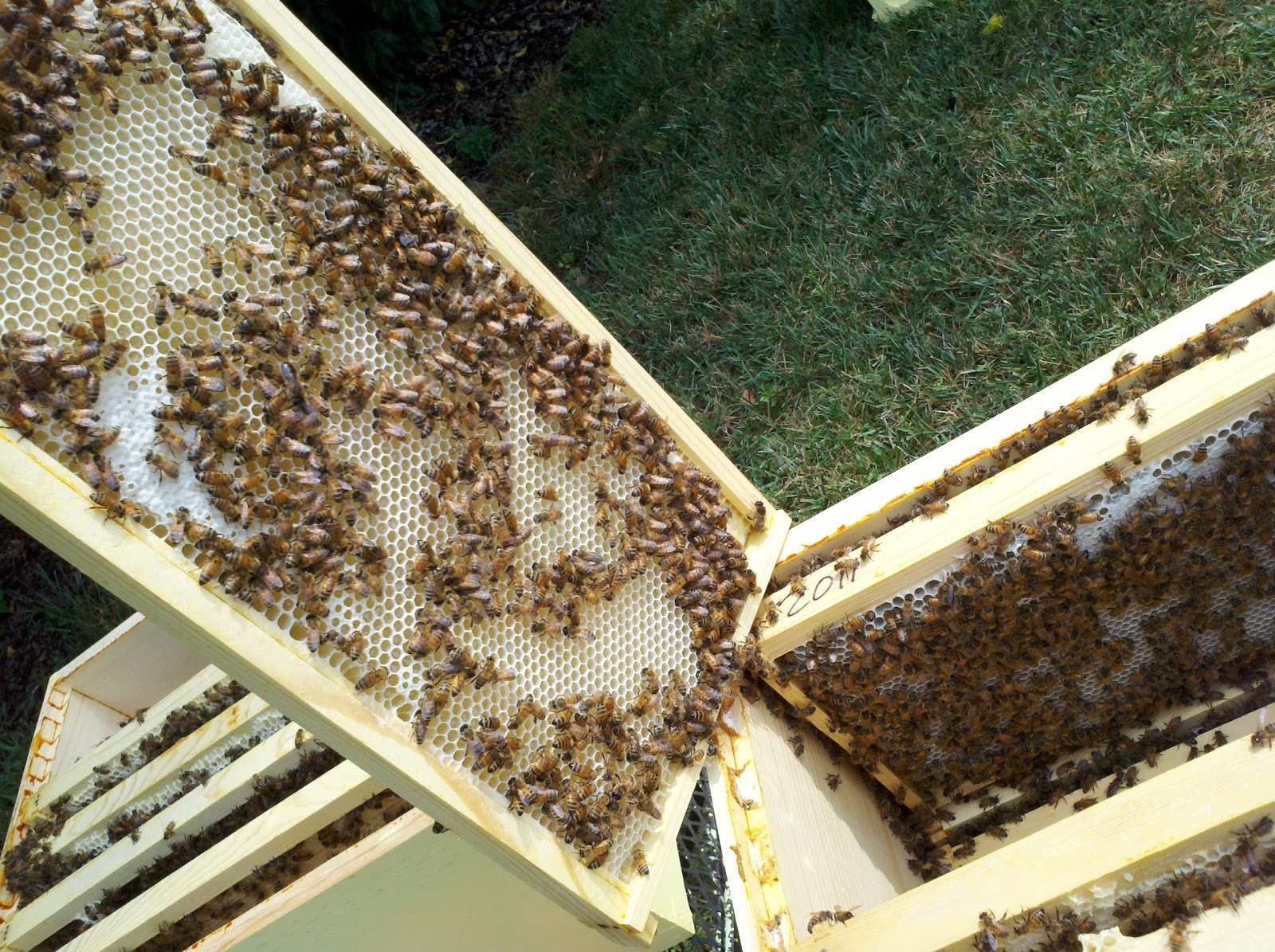
Woo-HOOO, they're going for it. This is the end frame. You can actually see they've begun drawing out the first two-thirds of the foundation from the top down. Once they finish, the comb will extend beyond the support wires I installed on each and every frame for added durability, helping the comb to be strong from within (which is great come honey extraction time).


Not just the first end frame, but frames two and three also were being drawn out. SUCCESS!


Every frame, EVERY SINGLE ONE, had been worked in the honey super in just one week. Holey moley! This was a favorite of mine, since they'd reached the bottom with fresh beeswax they'd secreted and shaped into comb. I was ecstatic to see so much success in such a short period of time. This further ensures my love of Russian bees. They do take longer to gear up than the Italian variety, but they also defy odds and are amazingly industrious when they want to be. Wow! I'm going to have honey next year, people (okay, okay, I'll calm down now)!!


After the super, I moved onto the top brood box. I'd taken three honey frames out of the top brood box over the past two weeks. Last weekend I noticed they'd not touched one of the replaced frames on the West end of the box. But in the last weekend they definitely started drawing it out. In fact, there was an odd chunk of burr comb on the face of this that I removed.


Another previously untouched frame, underway. I also noted the increased number of drone cells I saw capped, too. There are more male eggs being laid by the queen. Hive Boris now has plenty of useless, big honey-eating male bees wandering around. I believe I will requeen this hive when I make the split for hive Natasha. This should help ensure overwinter success for Boris and honey next spring. I removed another strange biscuit of comb that was attached to this frame, which two weeks ago was blank. More success!


They're prepping for autumn and winter well, with lots of simple syrup honey on the brood box frames.

Lots of bees greeted me in the top brood box, and lots of comb.


I only checked the top box, not the bottom. I'm always wondering "is she still in there?" about the queen. More capped brood in a nice pattern, lots of honey stores, and drone cells out the outlying edges on this one. She'd worked the top box nine days ago. The hive was unusually calm and not at all defensive. I took all this as a good sign, and that her highness is alive and well.


And here's a shot of the last two frames, which two weeks ago were blank after I'd removed honey frames. These girls had fully drawn out these big deep frames. They're ready for food stores and eggs. Hive Boris has been working at full speed, in direct full sun with highs close to or hitting the 100-degree mark. This hive is boiling over with bees, and ready to split.


I am convinced the full sun has kept beetles and moths at bay, especially the beetles. Just in case, last week I put in four beetle traps. I've only seen three small hive beetles this season, and three wax moths outside the hive trying to get in. This week I saw no moths at all. But this beetle jail managed to nab one of the bad guys. The bees enjoy chasing the beetles into the traps, which contain vegetable oil and kill the beetles.  They'd also begun drawing out this end frame as well.


Now, if I was serious about splitting, I'd have to get my hands dirty. This wasn't necessary now. I could just let the bees rob the honey frames over several days. That just seems so unseemly to me. And I needed to get my extracting equipment in order. So why not spin out those four frames, get my hands dirty a bit and have them ready for Hive Natasha's queen to lay in? So out came the steam cleaner.

Doing this for the first time, in my own setup, on my own screened in back porch was wonderful. It took a while to clean and prepare, but once I did so, it was butterflies and excitement to remove those first cappings!


My tangential bench extractor can handle two deep frames at a time. After freezing the frames for about a week each, I'd moved them to my awesome, vintage Coleman cooler I inherited from my late dad. The cooler will hold nine deep frames of comb. It kept them safe and sound until I could extract.


It also makes for a great bench for this, well, bench extractor.


I spun and spun, but it didn't take much for the extractor to do each side (with tangentials, you have to spin out one side, rotate the frames and then spin the other). It was a lovely Sunday afternoon. And then I opened the honey gate. Wow, look at that "honey" they'd made out of the simple syrup I'd been feeding them.  collected 18 pounds, or a gallon and a half of syrup honey that I'll feed back to the bees via the top feeders.


It kept coming and coming. Yes!! This was a big deal. In just two months I'd gotten this far, and gotten the bees to prepare for next spring's nectar flow, and done a dry run of what it'd be like come honey time at T's Bees. Pretty cool. Next up, splitting and creating Hive Natasha.